Textured HDPE geomembrane
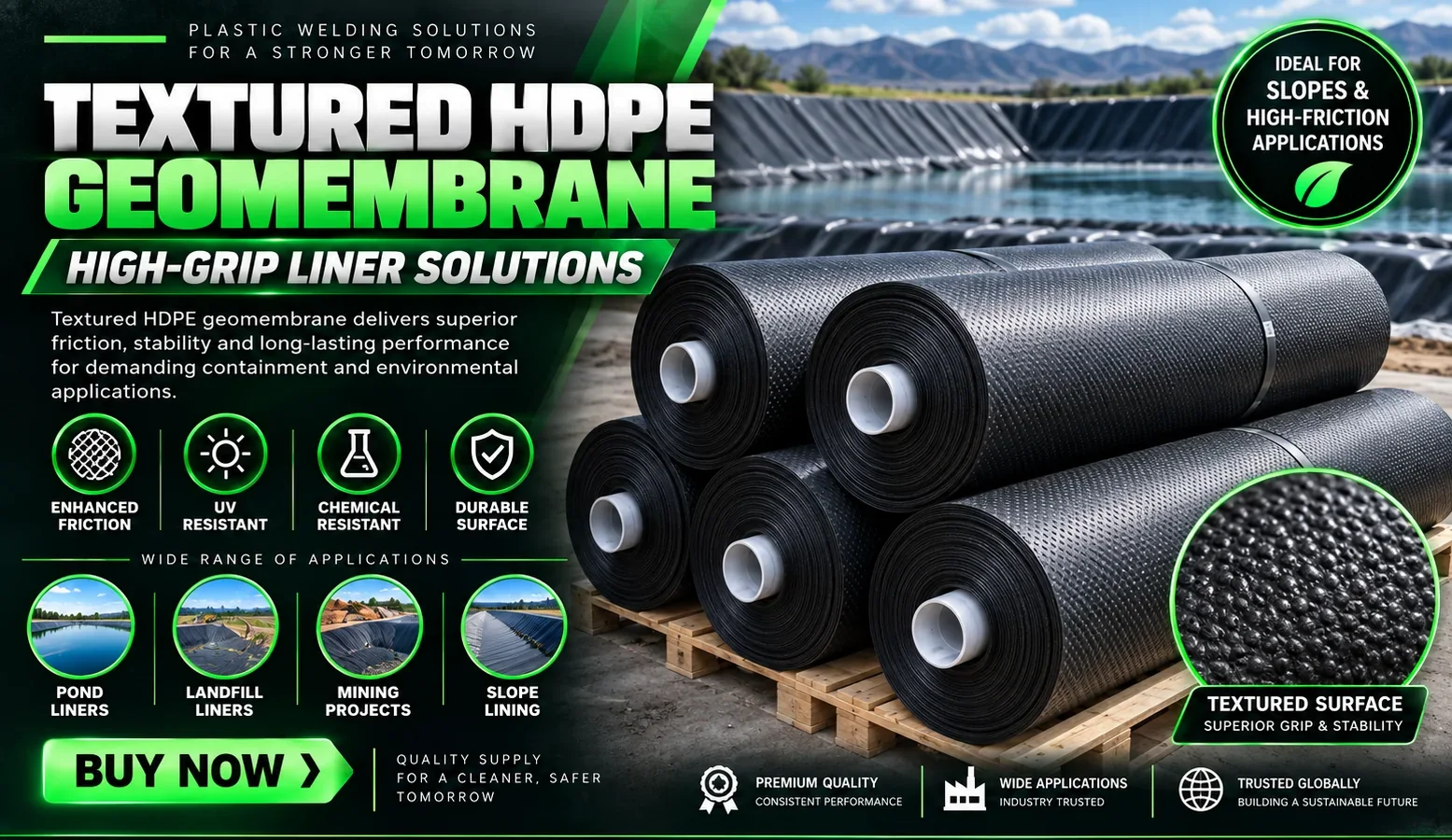
Single and double side textured liner for side slopes, capping systems and anywhere interface friction governs the design. Supplied in the same thickness range as smooth sheet.
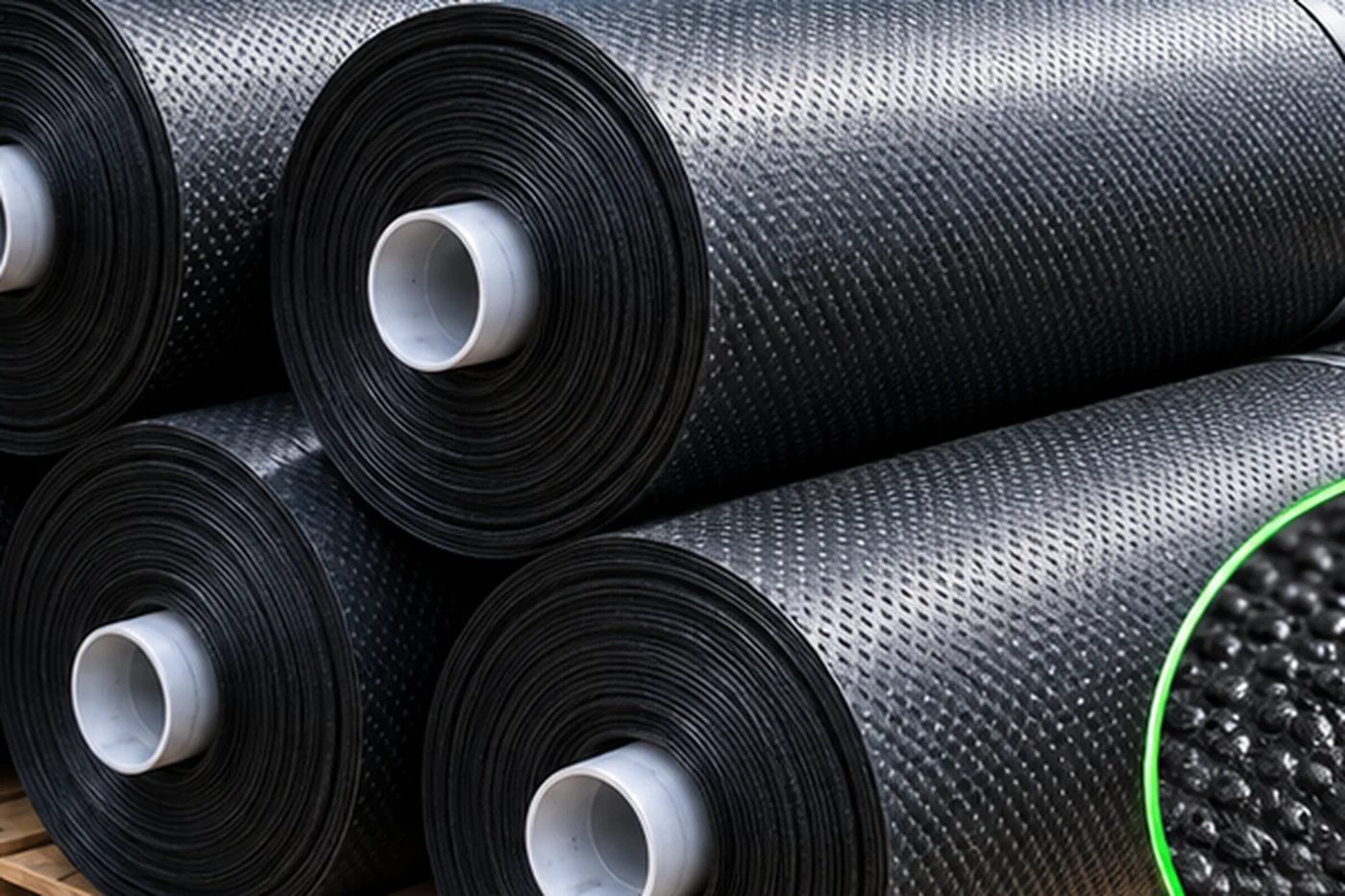
Put a smooth HDPE liner on a one in three slope, cover it with drainage stone, and the stone will find a way down. Polyethylene is a low friction material, and the interface between smooth liner and whatever sits on it is often the weakest plane in the whole structure. Texturing exists to solve exactly that problem.
What texturing does
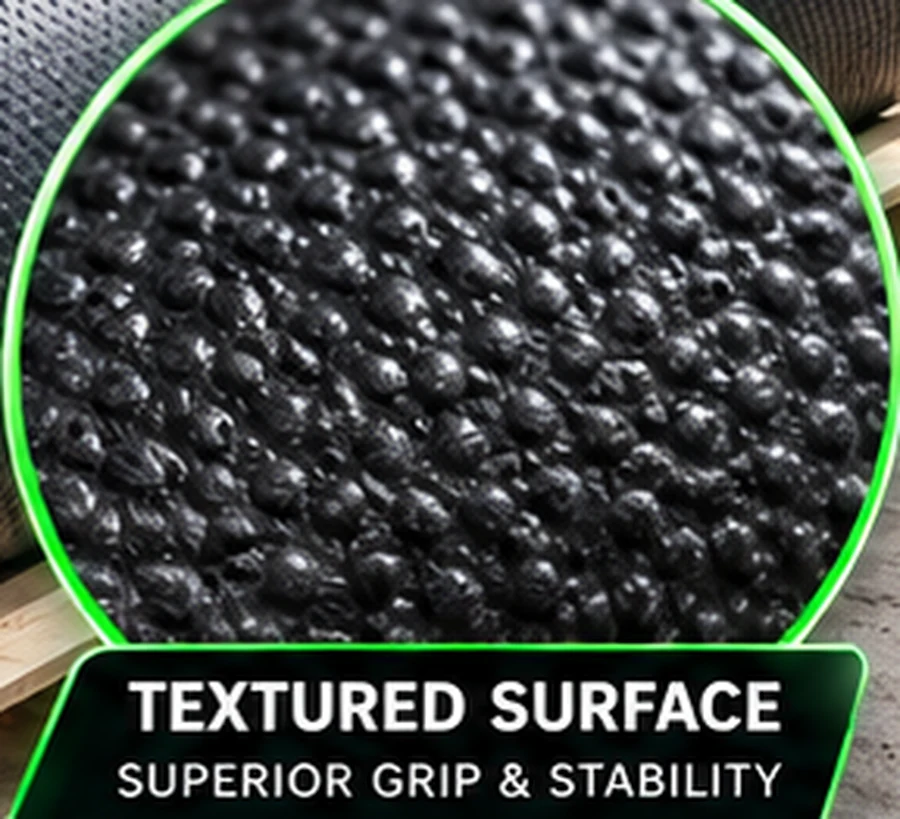
The sheet is manufactured with a roughened surface, typically by nitrogen co-extrusion, which raises a dense irregular pattern of small asperities. Those asperities interlock with soil particles, geotextile fibres or drainage aggregate, and raise the interface friction angle from something that will not hold on a slope to something that will.
The design consequence is direct: interface shear strength is what the slope stability calculation depends on, and the engineer will normally require interface shear testing to ASTM D5321 on the actual materials being used rather than accepting generic values.
Where it is specified
- Landfill side slopes. The classic application, and usually double side textured because both the subgrade below and the drainage layer above need friction.
- Capping systems. Cover soil on a capped slope has to stay where it is put, often for decades.
- Leach pads and heap leach. Steep working slopes carrying heavy loading, where a slip is a serious event.
- Reservoir batters. Steeper reservoir sides, particularly where the liner is covered rather than exposed.
- Anywhere with a geotextile interface. Smooth liner against geotextile is a notably low friction combination.
Core thickness, and the mistake it causes
This is the point worth reading twice. On smooth sheet, thickness is thickness. On textured sheet, a caliper placed across the surface reads through the asperities, and those asperities carry no load. The number that matters is core thickness, the continuous body of the sheet beneath the texture, measured to ASTM D5994.
A quotation for 1.50 mm textured liner should mean 1.50 mm of core. If it means 1.50 mm measured over the texture, the actual structural section may be considerably less, and the material will not meet a specification written on core thickness. When comparing textured liner quotations, confirm in writing which measurement each one refers to. It is the single most common way buyers end up with material that fails conformance testing.
Ask for the textured data sheet
Textured geomembrane has its own property table, including an asperity height requirement and slightly different tensile values from smooth sheet. Do not assume the smooth specification transfers across. We supply the correct sheet on request.
Welding textured liner
The asperities have to be melted through before the sheet beneath can fuse, so a hot wedge welder needs more heat input on textured material than on smooth sheet of the same gauge. In practice that means either raising the wedge temperature or reducing travel speed, and confirming the result with trial weld coupons rather than assuming the smooth sheet settings carry over.
Where a project involves a lot of textured seaming, smooth edge textured liner is worth asking about. It carries smooth bands along the roll edges so seams are made on smooth material while the body of the sheet retains its friction. For extrusion work the difference is minor, because the surface is ground back before welding regardless.
Textured geomembrane product sheet
Downloadable and shareable. Right click to save, or send it from WhatsApp when an engineer asks what texturing we supply.
Frequently asked questions
What is textured HDPE geomembrane?
Textured geomembrane is HDPE liner with a roughened surface produced during manufacture, usually by nitrogen co-extrusion which raises a fine irregular pattern of asperities across the sheet. The purpose is friction. A smooth liner on a steep slope has a low interface friction angle against soil, geotextile or drainage layers, and the material above it can slide. Texturing raises that friction angle substantially, which is what allows liner to be used on side slopes at all.
Single or double side textured?
It depends on what sits against each face. Double side textured is used where friction is needed against both the subgrade below and the cover material above, which is the usual case on landfill side slopes and capping systems. Single side textured is used where only one interface needs friction, commonly with the textured face upward against a protection geotextile and the smooth face down on a prepared subgrade. The engineer specifies which, based on interface shear testing.
Why is core thickness measured differently on textured sheet?
Because the asperities are not structural. On smooth liner, thickness measured anywhere is the load bearing section. On textured liner, a caliper reading over the raised texture includes material that carries no load, so the measurement overstates the sheet. The specification therefore uses core thickness, measured to ASTM D5994, which reads the continuous body of the sheet beneath the texture. A textured sheet described as 1.50 mm should have 1.50 mm of core, not 1.50 mm including asperities. This is a genuine source of mis-supply, so confirm which figure a quotation refers to.
Is textured liner harder to weld?
Slightly, and it changes the process. The asperities have to be melted through before the sheets beneath can fuse, so a wedge welder generally runs at a higher temperature or a slower speed on textured material than on smooth sheet of the same gauge. Some contractors specify smooth edge textured liner, which has smooth bands along the roll edges precisely so the seams can be made as if on smooth sheet. For extrusion work the surface is ground back before welding in any case, so texturing matters less there.
Does textured liner have the same tensile properties?
Not identical. The texturing process affects the sheet, and textured geomembrane specifications carry slightly different tensile and elongation requirements from smooth sheet, along with an asperity height requirement that smooth sheet has no equivalent of. Density, carbon black content, oxidative induction time and stress crack resistance are the same, because those are properties of the formulation. Ask for the textured data sheet rather than assuming the smooth specification applies.
All of this is backed by the machine range we stock and export from Dubai.
Textured liner and the plant to weld it
Send the slope geometry and the interface materials. We will confirm single or double side texturing and quote sheet and machines together.