IZ-1600 hot air gun and hot air welding machine
The IZ-1600 is the most used and least expensive machine on a lining crew's plant list. 1600 W, adjustable from 20 to 620°C, 180 L/min of air, and 1.05 kg in the hand. It tacks liner before the main weld and welds PVC and coated fabric outright.
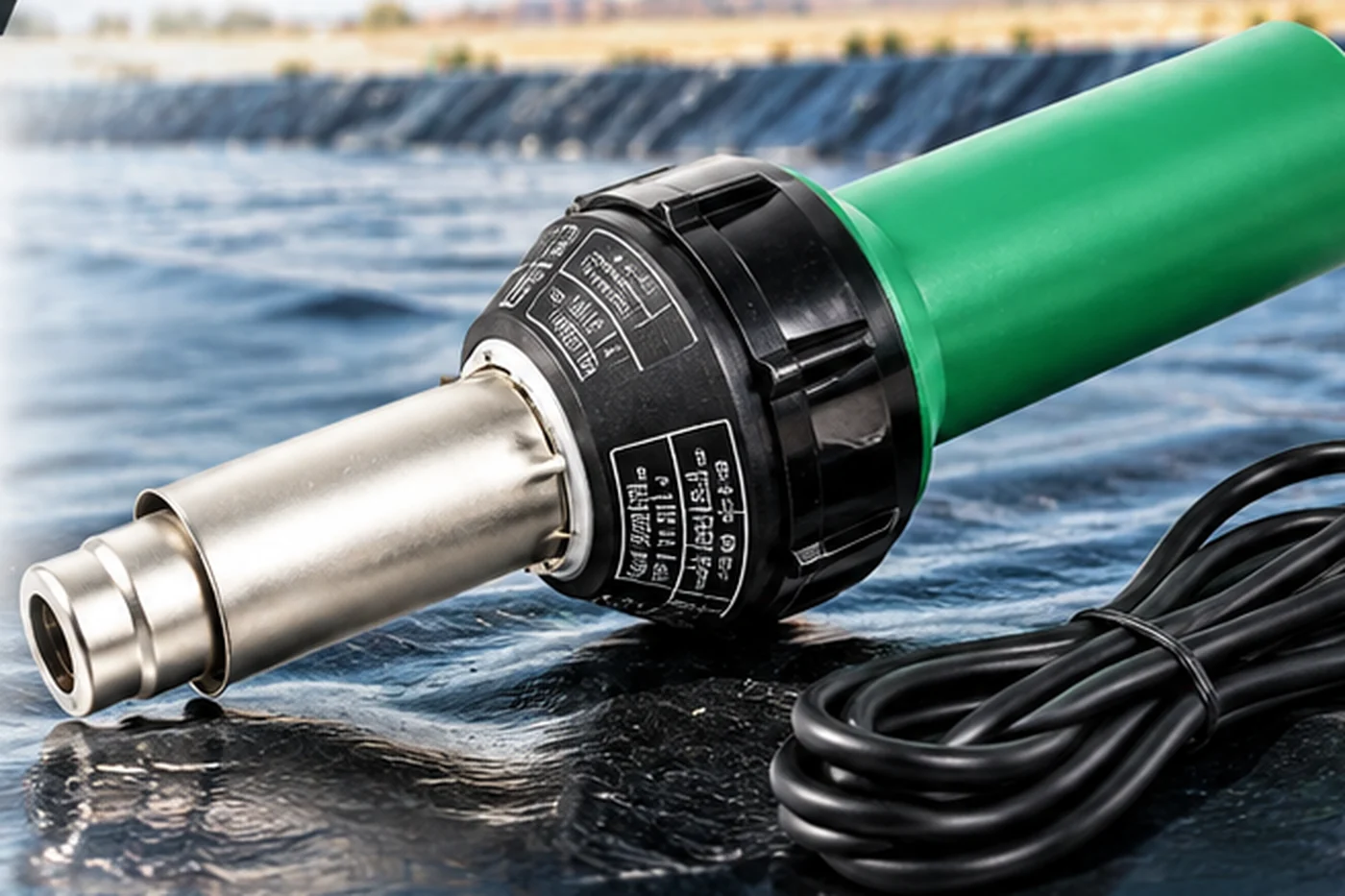
Two different tools share this name, and buyers often order the wrong one. Both use the same principle, a stream of precisely controlled hot air that softens two thermoplastic surfaces so they can be pressed together, but they are built for different work.
A hand held hot air gun is a controlled heat source with a nozzle. You guide it and apply the pressure yourself, usually with a silicone roller in your other hand. It is light, portable and used for tacking, repairs, corners and short seams.
An automatic hot air welding machine works like a wedge welder but substitutes hot air for the heated wedge. It drives itself along the overlap with a hot air nozzle between the sheets and a driven pressure roller behind, producing continuous seams in coated fabric at speeds a hand gun cannot approach.
The role of hot air on a geomembrane site
On an HDPE lining project, hot air is a supporting process rather than the main event. Its jobs are specific.
- Tacking panels. Liner panels are positioned and tacked at intervals along the overlap so that wind cannot move them before the wedge welder passes. In the Gulf this is not optional; an untacked panel can lift and fold in seconds.
- Preheating for extrusion. Every extrusion welder has hot air preheat built in, and separate hot air is used to warm larger areas before detail work.
- Temporary repair. A hot air patch holds water out until a proper extrusion repair can be made and tested.
- Thin and flexible materials. PVC liners, geotextile composites and coated fabrics used around structures are hot air welded outright.
Materials that need hot air rather than a wedge
Outside of geomembrane work, hot air welding is the dominant industrial process for flexible coated materials. PVC coated polyester is the largest category: truck curtains, tarpaulins, tents and marquees, awnings, advertising banners, inflatable structures, and pool and pond liners in PVC. Single ply roofing in TPO and PVC is welded the same way, with an automatic machine running along the membrane laps. Thin material, high production speed and no requirement for an air test channel all point to hot air rather than a wedge.
Specification
Manufacturer figures for the IZ-1600 hand gun as supplied. Automatic hot air welders, which drive themselves along a seam, are a different tool and are covered further down.
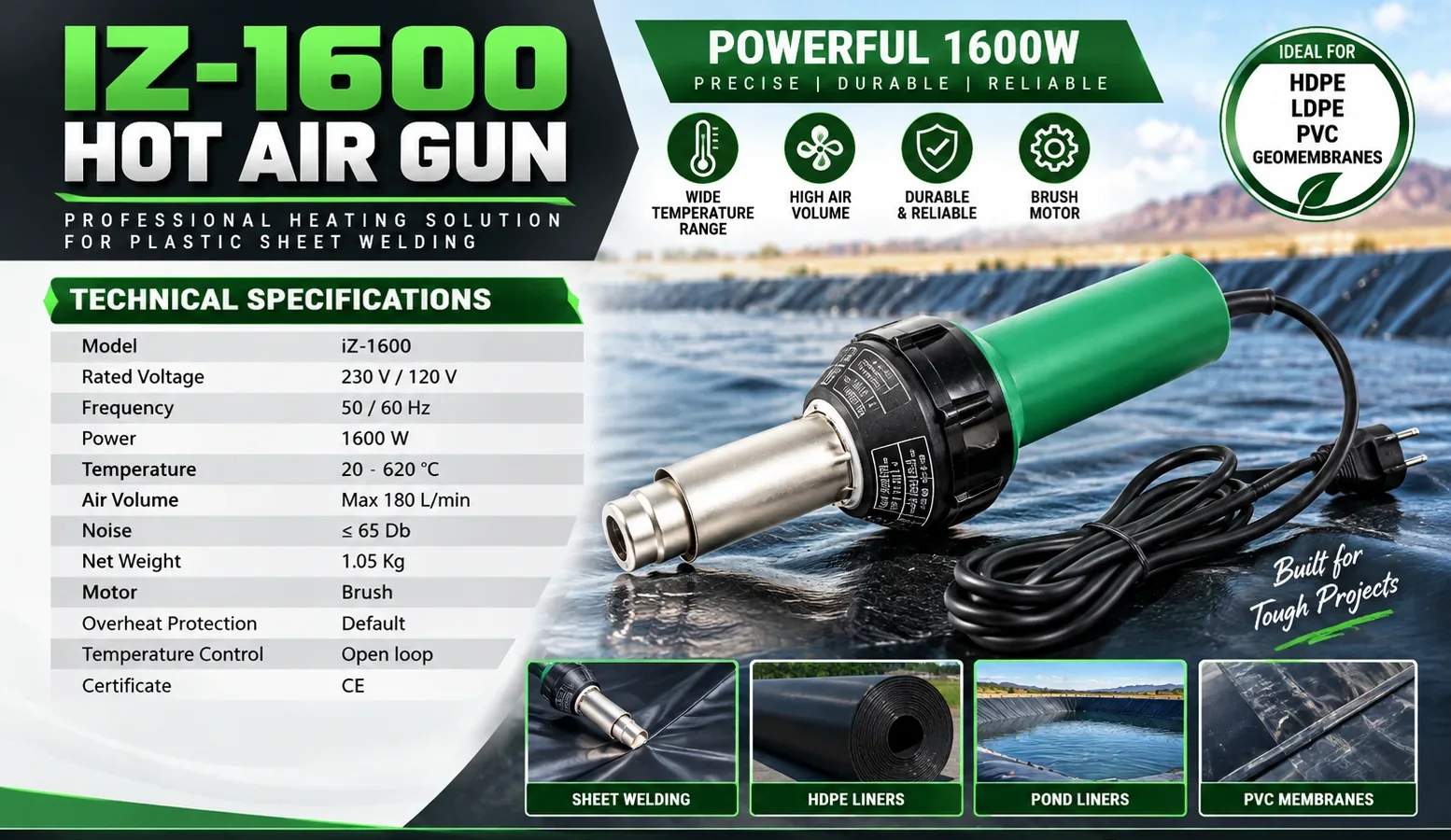
| Parameter | Specification |
|---|---|
| Model | IZ-1600 |
| Power | 1,600 W |
| Rated voltage | 230 V / 120 V |
| Frequency | 50 / 60 Hz |
| Temperature | 20°C to 620°C |
| Air volume | Maximum 180 L/min |
| Temperature control | Open loop |
| Motor | Brush |
| Overheat protection | Fitted as standard |
| Noise | 65 dB or below |
| Net weight | 1.05 kg |
| Certification | CE |
| Materials | HDPE, LDPE, PVC and coated fabric |
| Warranty | 1 year |
Temperature control on this gun is open loop, meaning the dial sets heater output rather than holding a measured target. Air temperature therefore drifts with mains voltage, ambient conditions and how hard you are working it. That is normal for a gun in this class and fine for tacking and general work, but it means trial welds matter more, not less. A closed loop gun costs considerably more and is worth it only for production seaming to a written specification.
IZ-1600 product sheet
Downloadable and shareable. Right click to save, or send it from WhatsApp when a customer asks for specifications.
Starting temperatures by material
Set the machine to the material in front of you. These figures are starting points for a trial weld on an offcut, not settings to run production from.
| Material | Air temperature | Notes |
|---|---|---|
| PVC coated fabric, tarpaulin | 350-480°C | Scorches easily. Reduce temperature before reducing speed. |
| PVC banner and awning material | 380-500°C | Thin material, high speed, light roller pressure. |
| TPO roofing membrane | 450-580°C | Runs hotter than PVC. Clean the lap before welding. |
| PVC pond and pool liner | 350-450°C | Overlap seam with roller pressure, then probe the edge. |
| HDPE and LLDPE, tacking only | 450-600°C | Spot tacks only. Primary seams go to a wedge welder. |
| Geotextile and composites | 300-450°C | Varies widely by product. Always trial first. |
Ventilate when welding PVC
Overheated PVC releases hydrogen chloride. Working at the correct temperature avoids it, but enclosed workshops welding PVC all day need extraction regardless. This is one reason running the machine too hot is a safety issue and not only a quality one.
Buying a gun, a kit, or an automatic machine
Three sensible purchases, depending on the work.
- Bare gun. For a crew that already has nozzles and rollers and needs a spare or replacement body.
- Gun kit. Gun, a set of nozzles, silicone pressure roller, and case. The right first purchase for a lining crew or a fabrication shop, and the version most people should buy.
- Automatic hot air welder. For production seaming of coated fabric or roofing membrane, where a hand gun cannot keep up or hold consistency.
A lining contractor buying one machine of each type will typically pair a gun kit with a wedge welder and a hand extruder. That combination covers every seam on a normal geomembrane installation.
Frequently asked questions
What is a hot air welder used for?
Two quite different jobs. On a geomembrane installation, a hot air gun tacks the overlapping liner panels together every few metres so they cannot shift in the wind while the wedge welder makes the real seam, and it preheats material before extrusion work. Away from lining, hot air welding is the primary joining method for PVC coated fabric: tarpaulins, truck curtains, banners, awnings, inflatable structures, pond liners in PVC, and single ply roofing membrane. Same physical process, different scale of work.
What is the difference between a hot air gun and a heat gun?
A DIY heat gun for stripping paint and a professional hot air welding gun look similar and are not interchangeable. A welding gun reaches a far higher, finely adjustable air temperature, moves enough air to weld with rather than merely heat with, accepts precision nozzles, and is rated to run for hours. The IZ-1600 gives 20 to 620°C and 180 L/min against the two or three coarse settings on a hardware store gun.
Being straight about this one: the IZ-1600 uses open loop control and a brush motor. It is a working site tool, not a laboratory instrument, and it will not hold a target within a couple of degrees the way a closed loop gun does. That is why trial welds decide your settings rather than the number on the dial.
What temperature is used for hot air welding?
It depends entirely on the material. PVC coated fabric and banner material generally weld between 350°C and 500°C. TPO and single ply roofing run hotter. HDPE tacking needs high air temperature because polyethylene has a higher melting point, often 450°C to 600°C at the nozzle. Ambient temperature, wind, material thickness and travel speed all shift the correct figure, so trial welds on offcuts of the actual material are the only reliable way to set a machine.
Can a hot air welder weld HDPE geomembrane seams?
For tacking, yes. For the primary seams on a lined structure, no. Hot air can fuse HDPE, but it cannot produce the dual track weld with a testable air channel that specifications demand, and it cannot maintain the consistency of a wedge machine over hundreds of metres. Its role on an HDPE job is tacking panels in position, preheating before extrusion, and occasional temporary repair. The load bearing seam is made by a hot wedge welder.
Which nozzle do I need?
The nozzle does more to determine what a gun can do than the gun body does. A flat or wide slot nozzle used with a silicone pressure roller makes overlap seams in fabric and membrane. A tacking nozzle concentrates air into a narrow line for spot tacking liner panels. A round nozzle is for preheating and general heating. A pencil nozzle reaches into corners and detail. Most buyers need two or three, and they are inexpensive enough that carrying a set is normal. We stock them as accessories.
Is a hot air welding machine suitable for tarpaulin production?
Yes, and for volume work an automatic hot air welder is the right tool rather than a hand gun. Automatic machines drive themselves along the seam at a set speed with a set air temperature and a driven pressure roller, producing consistent 20 mm to 40 mm seams in PVC coated fabric all day. Hand guns are for repairs, corners, patching and short runs. If you are fabricating truck covers, banners or tents commercially, the automatic machine pays for itself in labour and rejects.
How much does a hot air welding gun cost?
A hot air gun is the least expensive machine in this range by a wide margin, well below a hand extruder and a fraction of an automatic wedge welder. Cost varies with whether you buy the bare gun or a kit with nozzles, roller and case, and with whether the unit is a professional continuous duty welding gun or a general purpose heat tool. Automatic hot air welding machines cost considerably more than hand guns. Tell us the material and the volume of work and we will quote the right tool at a delivered price.
See how this fits the rest of our geomembrane welding machine supply.
Related pages
- Wedge welding machineThe production machine for HDPE liner seams that hot air tacking prepares for.
- Extrusion welding machineHot air preheating is built into every extrusion welder for the same physical reason.
- Nozzles and spare partsNozzle choice changes what a hot air gun can do more than the gun itself does.
- Weldy HT1600The Leister group alternative, 700 degrees and 240 L/min.
Get an IZ-1600 quoted
Tell us the material, thickness and whether the work is site tacking or production seaming. We will quote the right tool with the nozzles it needs.