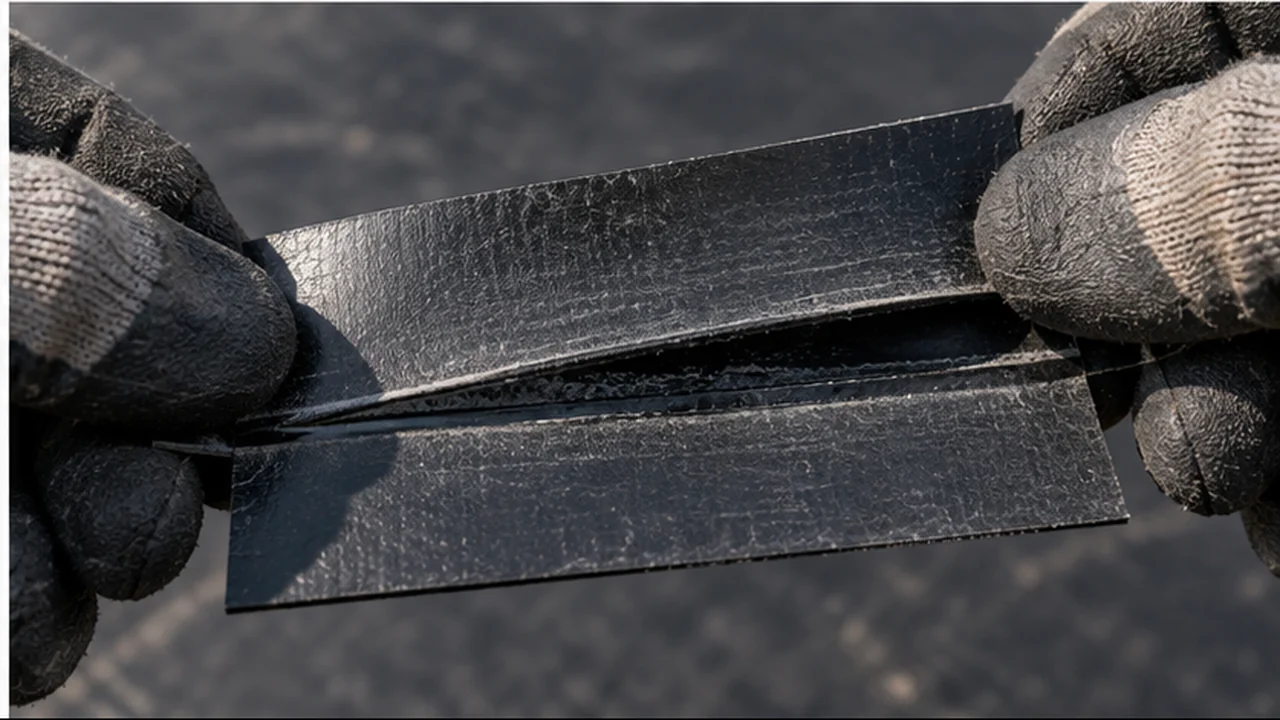
Cold weld
What you see: a seam that looks completely normal. Flat, tidy, correct width. It fails peel testing by separating cleanly at the interface between the two sheets.
Cause: insufficient heat input. Either the wedge was too cool, the machine travelled too fast, or a failing heating element dropped its temperature under load while the display continued to show the set point.
Fix: raise wedge temperature or reduce travel speed, then confirm by trial coupon. If settings look correct and the fault persists, suspect the heating element. This is the most dangerous defect because it is invisible without testing.
Burn through and excessive squeeze out
What you see: thinned or perforated sheet along the seam, heavy melt pushed out beyond the weld edges, distortion.
Cause: too much heat input. Wedge too hot, speed too slow, or excessive roller pressure. Common on thin liner run with settings intended for thicker sheet, and common in the afternoon when the sheet is already hot.
Fix: reduce temperature first, then speed. A small consistent squeeze out bead is normal and desirable; heavy squeeze out with thinning is not.
Extrusion bead peeling off the sheet
What you see: a bead that looks well formed and lifts cleanly off the parent material, often in one piece.
Cause: insufficient preheat, most of the time, or the wrong welding rod grade. The extrudate landed on cold plastic and bonded mechanically rather than fusing. Other causes are a contaminated or unprepared surface, travelling faster than the output rate supports, or the wrong rod resin.
Fix: increase preheat or slow down, grind and clean the surface and weld it the same day, and confirm the rod matches the sheet. Polypropylene rod on HDPE produces exactly this failure and no adjustment will cure it.
Porosity in the bead
What you see: bubbles or voids through the extrusion bead, sometimes only visible when cut.
Cause: damp welding rod, degraded material left sitting in a hot barrel between runs, or extrudate temperature set too high.
Fix: store rod sealed and dry, purge the barrel before starting a bead and before shutting down, and check the extrudate setting. Porosity is a leak path, not a cosmetic issue.
Inconsistent seam width or wandering
What you see: seam width varying along the run, or the machine drifting off the overlap.
Cause: glazed or worn drive rollers slipping, inconsistent operator guidance, or an overlap that was not set to a consistent width before welding.
Fix: inspect and replace the drive rollers, and mark the overlap before welding so the machine has a line to follow.
Contamination in the seam
What you see: dust, sand or moisture trapped in the weld, often correlating with a failed test at that location.
Cause: welding a dirty or damp overlap. In this region, blowing sand between panels is a constant problem, and condensation in early morning is real even in dry climates.
Fix: wipe the overlap immediately ahead of the machine, and do not weld damp liner. Most specifications prohibit welding on wet material for exactly this reason.
The pattern tells you where to look
A defect appearing everywhere points to settings or a machine fault. One appearing only in the afternoon points to ambient conditions. One appearing only on certain seams points to the operator or the material on those panels. Establish the pattern before changing anything.
Frequently asked questions
How do I know if a seam is a cold weld?
You cannot tell by looking, which is the entire problem. A cold weld appears normal. It is identified by peel testing: the coupon separates at the interface between the two sheets rather than tearing in the parent material. If your coupons are separating cleanly at the weld, you have a cold weld regardless of how good the seam looks.
Can a failed seam be repaired?
Yes. The standard repair is a cap strip: a strip of the same liner placed over the defective seam and extrusion welded along both edges, then vacuum box tested. For localised damage a patch with rounded corners is welded over the area. Both are normal operations that appear in every specification. What is not acceptable is leaving a failed seam and hoping.
It is one part of a broader offering in geomembrane welding machines and HDPE liner.